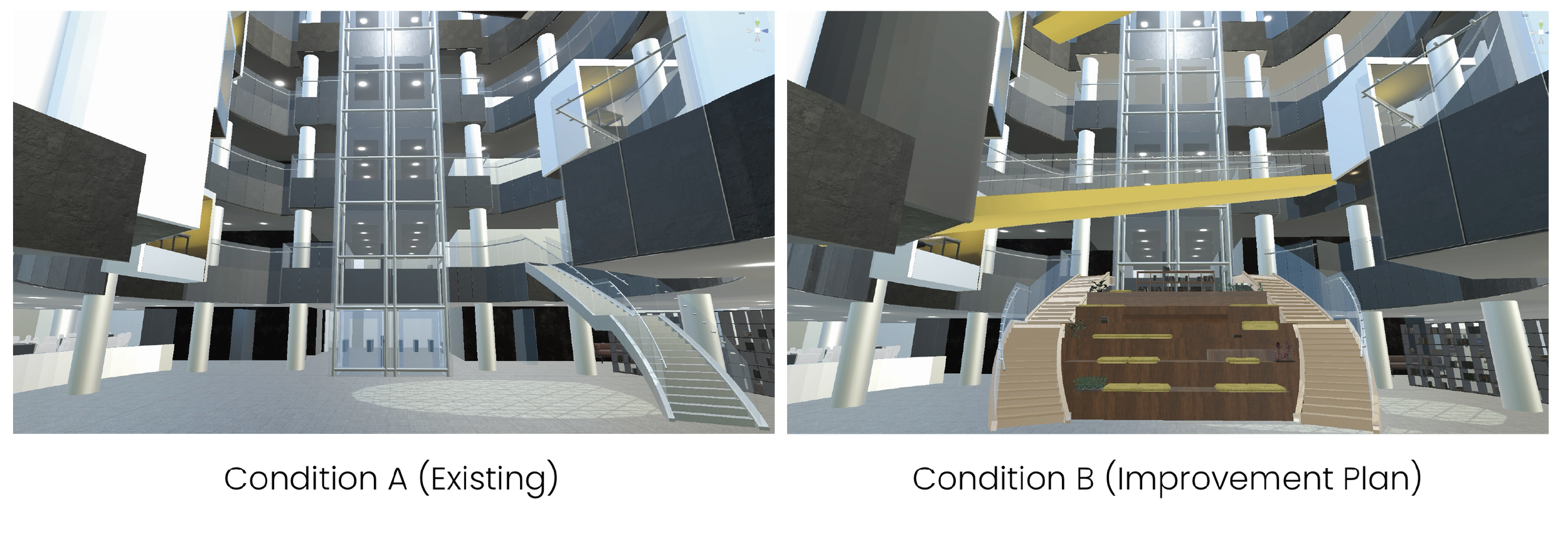
As part of the Sungkyunkwan University URP Undergraduate Research Program, we are continuing the project titled Designing Spaces that Shape Movement. This project explores how spatial design strategies can encourage physical activity and how movement may influence students’ creative thinking.
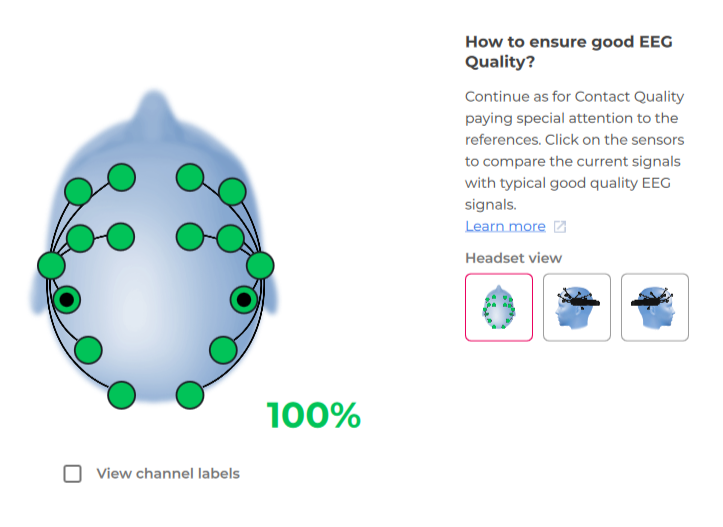
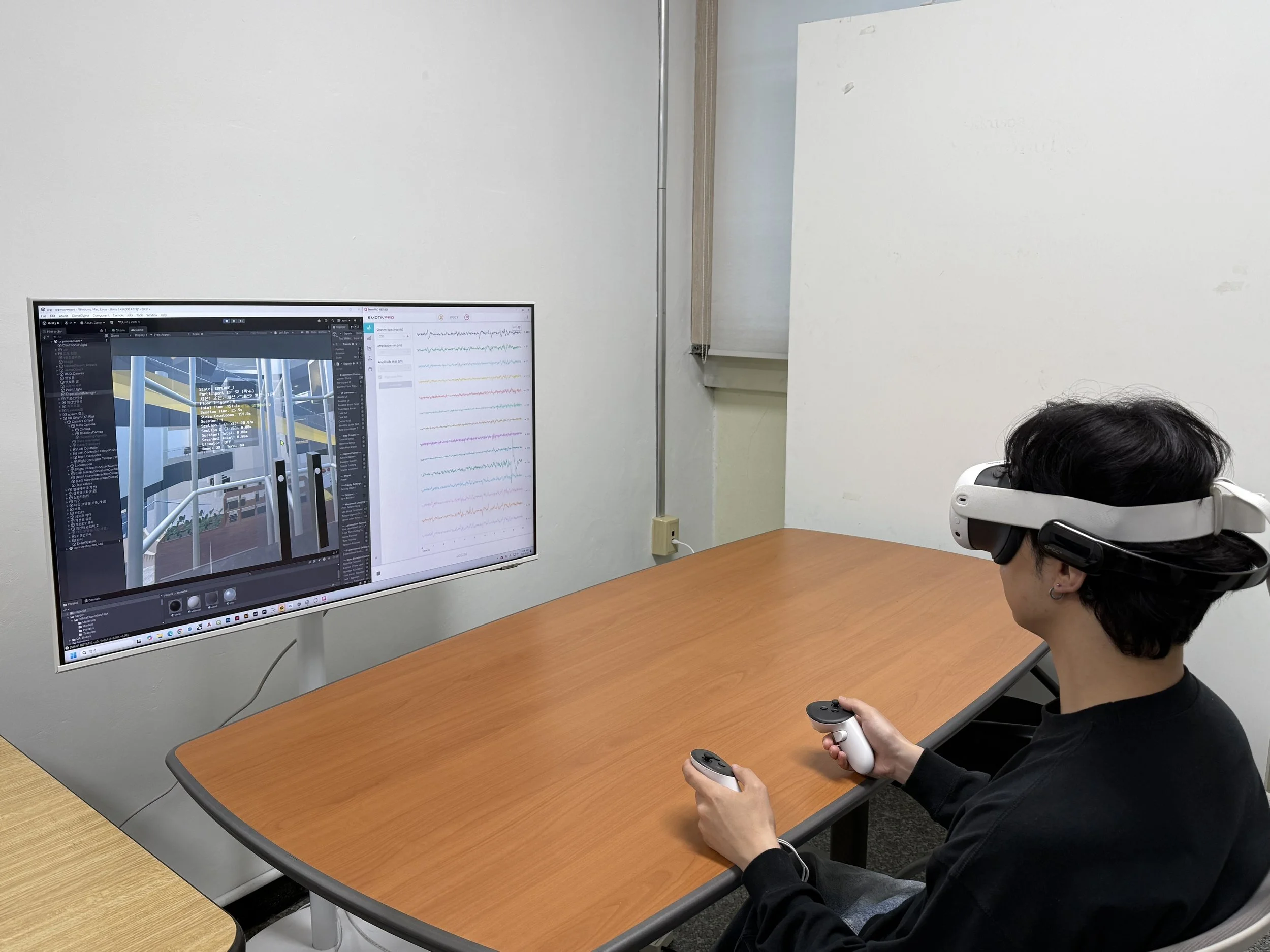
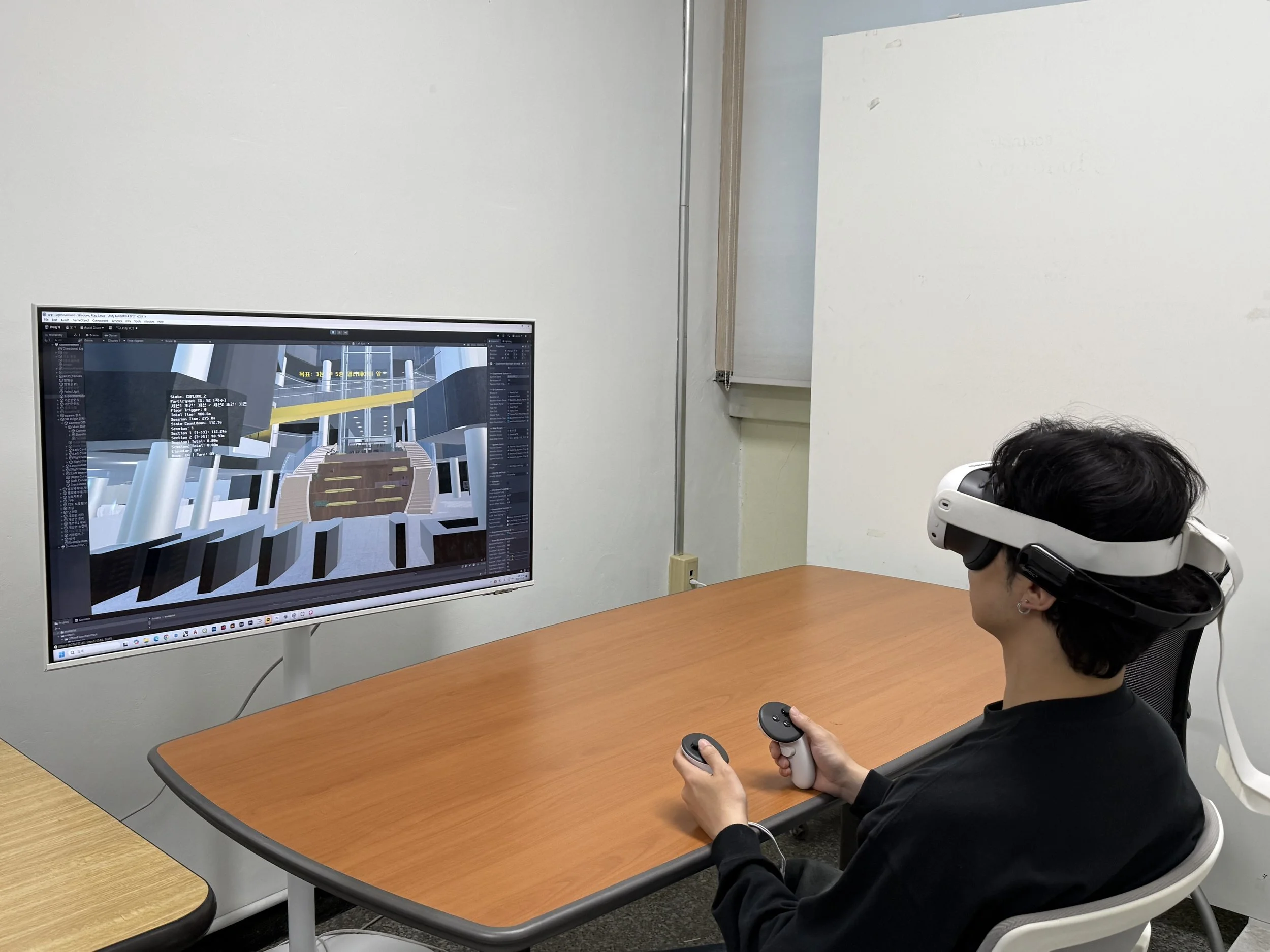
Following our previous fNIRS-based experiment at the Samsung Academic Information Center, this experiment uses EEG and VR to examine the relationship between movement and divergent thinking in a controlled virtual environment. Participants experienced VR-based movement conditions and completed creativity-related cognitive tasks, including Category Fluency and the Alternative Uses Task, such as generating words associated with a given color or proposing various uses for everyday objects. During the experiment, EEG data, movement data, task responses, and post-survey responses were collected to analyze how movement in space may affect creative thinking processes.
Through this experiment, we aim to better understand the cognitive effects of movement-based spatial experience and explore how these findings can inform future campus spatial design strategies that support both physical activity and creativity.