
2026 Urban Toilet Project
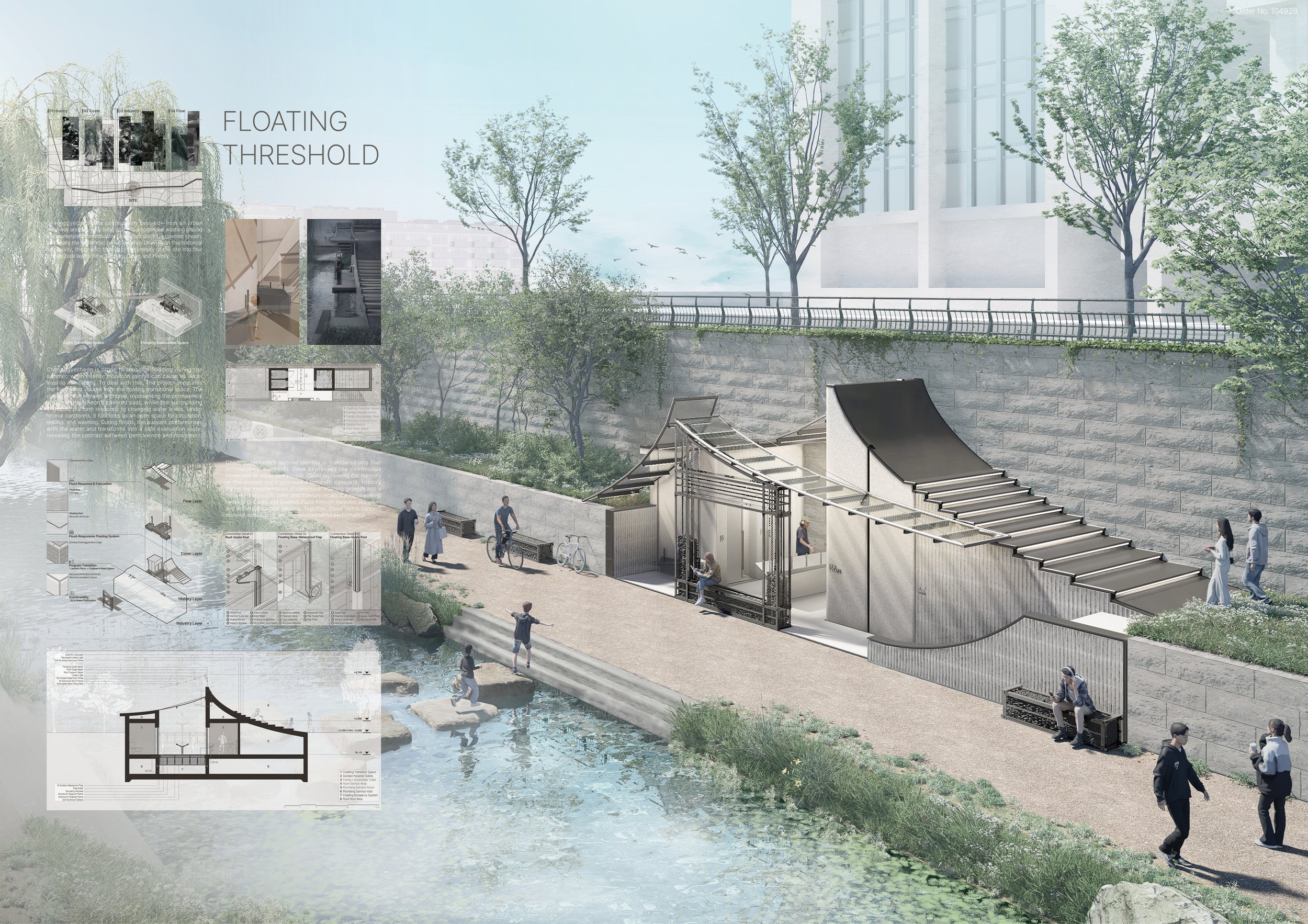
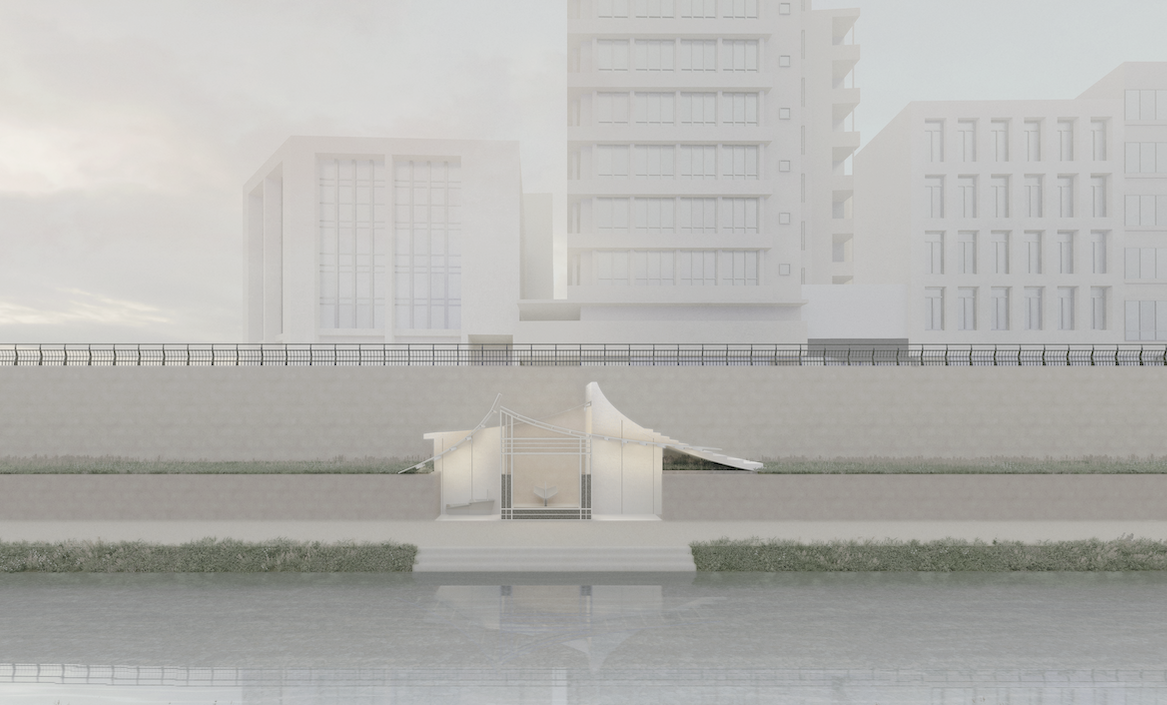
‘Project Title’ regards the public toilet not as an independent facility, but as an integral part of Cheonggyecheon.
It proposes a new form of public architecture by translating the stream’s accumulated time and memory into materials, structure, and programs.
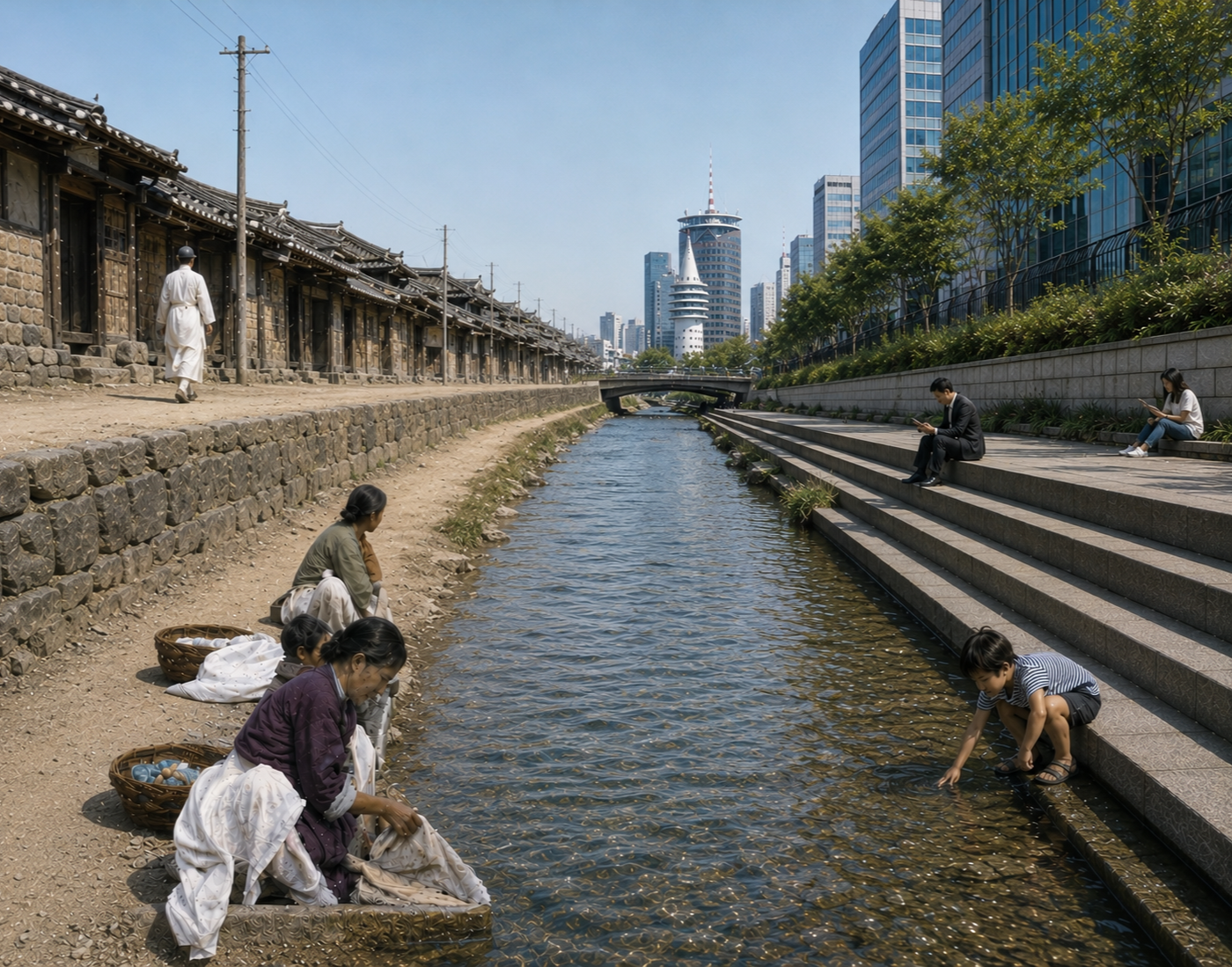
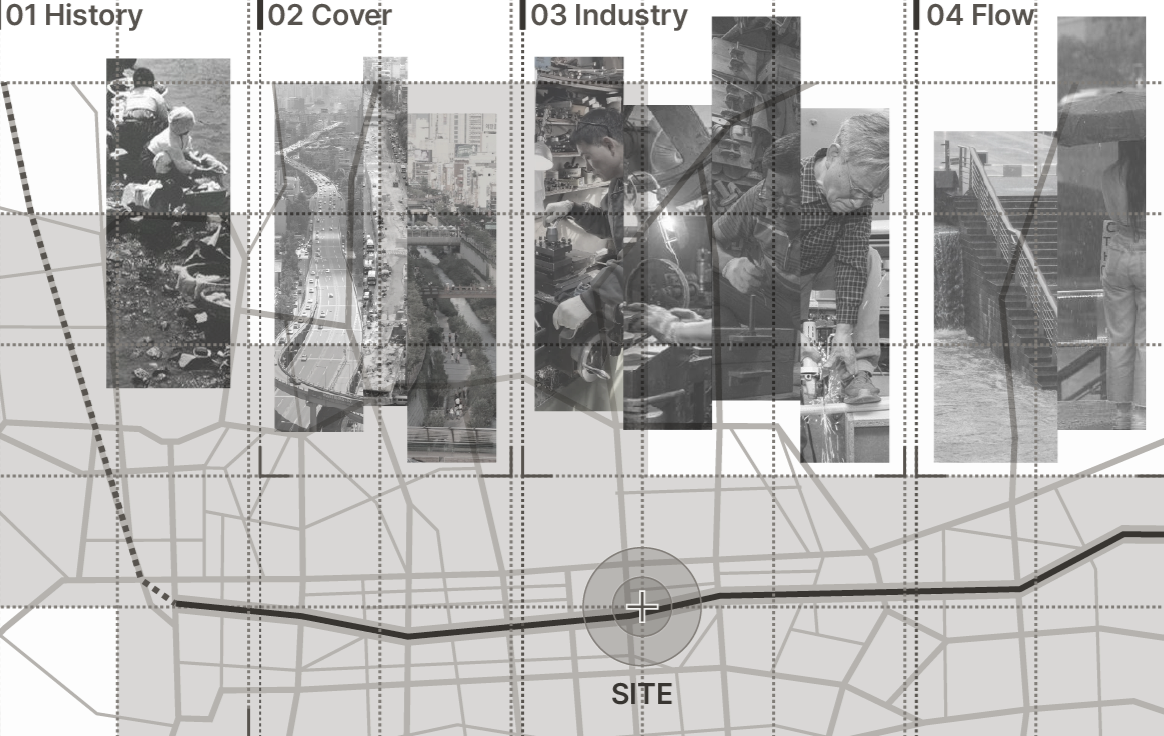
Cheonggyecheon once served as a communal washing place and everyday living space, and later became a foundation for markets and production during the period of industrialization.
After undergoing covering and restoration, it has been transformed into the waterfront park it is today.
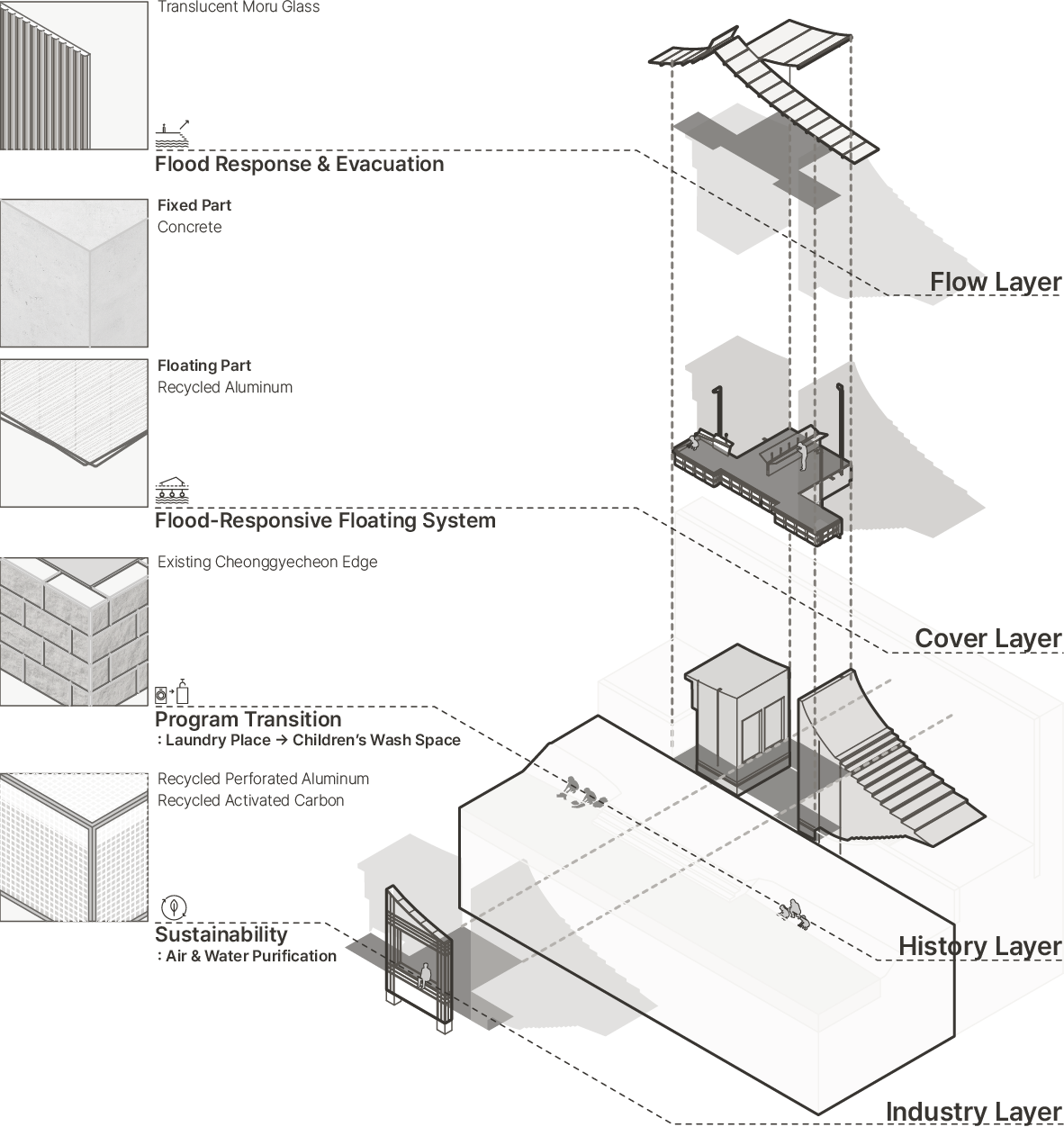
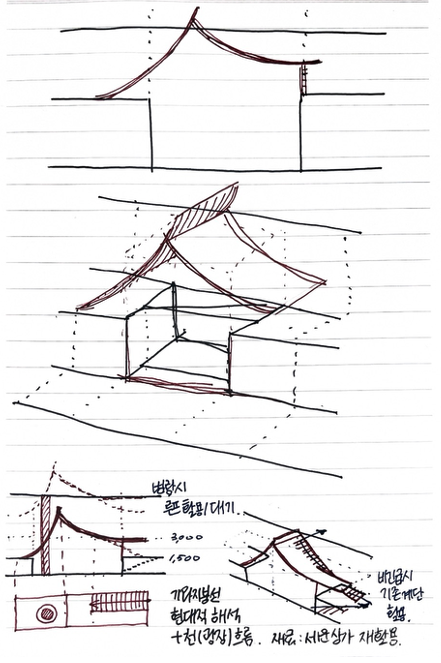
This project reinterprets these changes through four key concepts: History, Flow, Industry, and Cover.
‘History’ extends the changing programs of Cheonggyecheon—from washing place to market, industrial space, and waterfront park—into spaces for washing, foot cleansing, and rest.
‘Flow’ reflects the continuous movement of water and seasonal changes in water level, allowing the space to function as a pedestrian and resting area under normal conditions and as an elevated evacuation route and floating refuge during floods.
‘Industry’ recalls the metalworking, garment, and bookbinding industries surrounding Cheonggyecheon. Waste aluminum and activated carbon generated by these industries are reused as structural and envelope materials, combining local industrial memory with environmental performance.
‘Cover’ is expressed through a fixed concrete restroom mass that supports the movable floating transition space and serves as a secure evacuation axis during flooding.
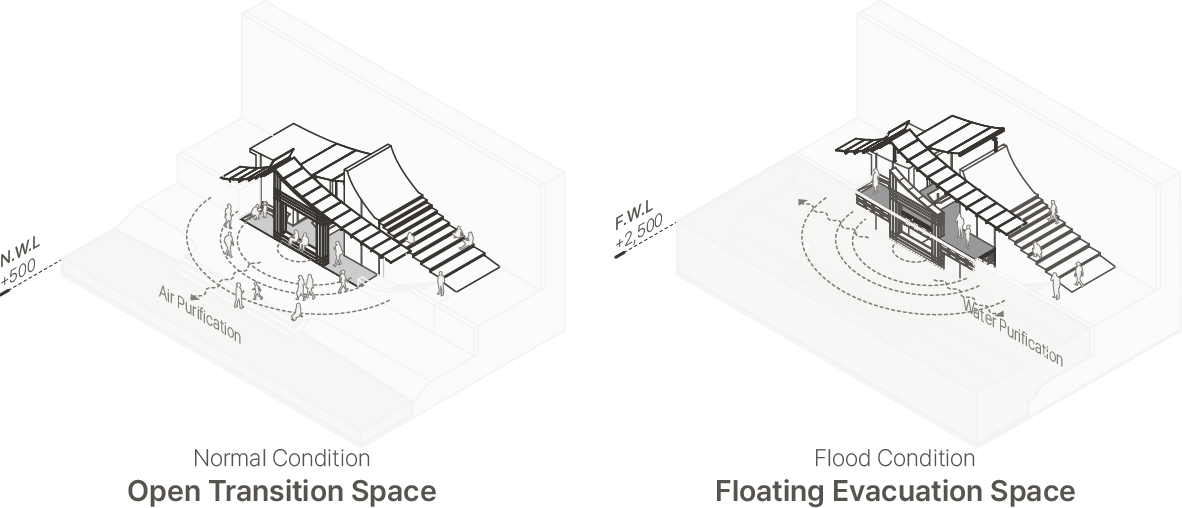
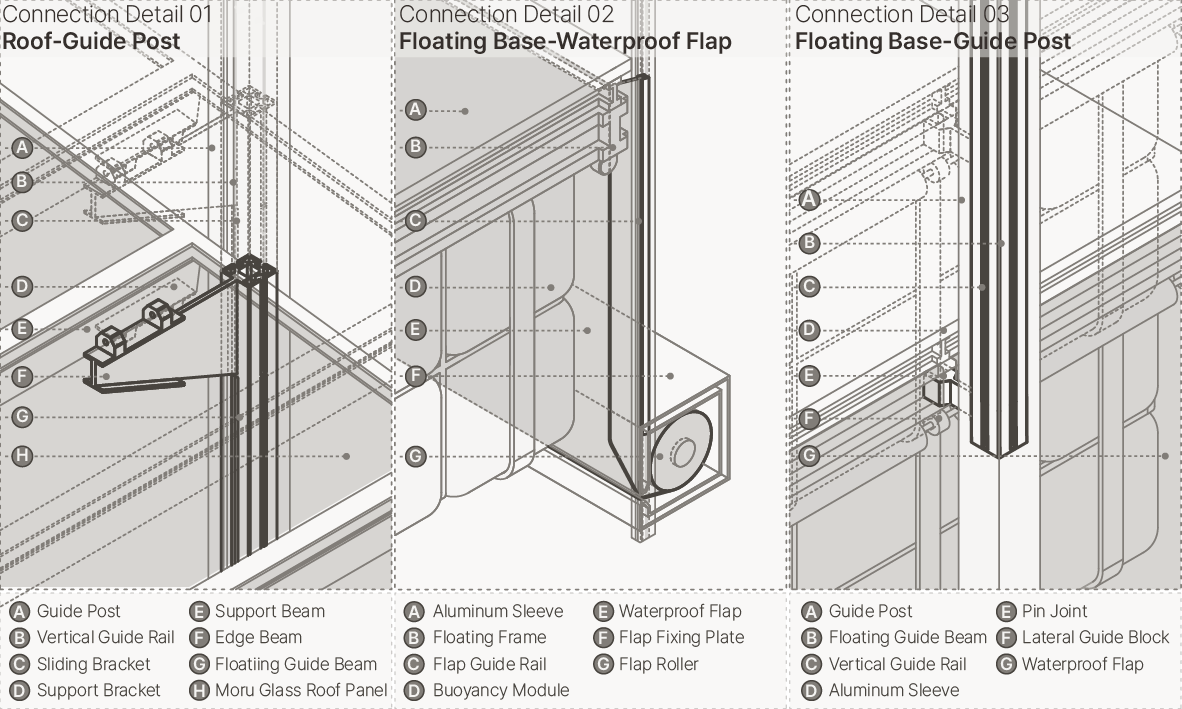
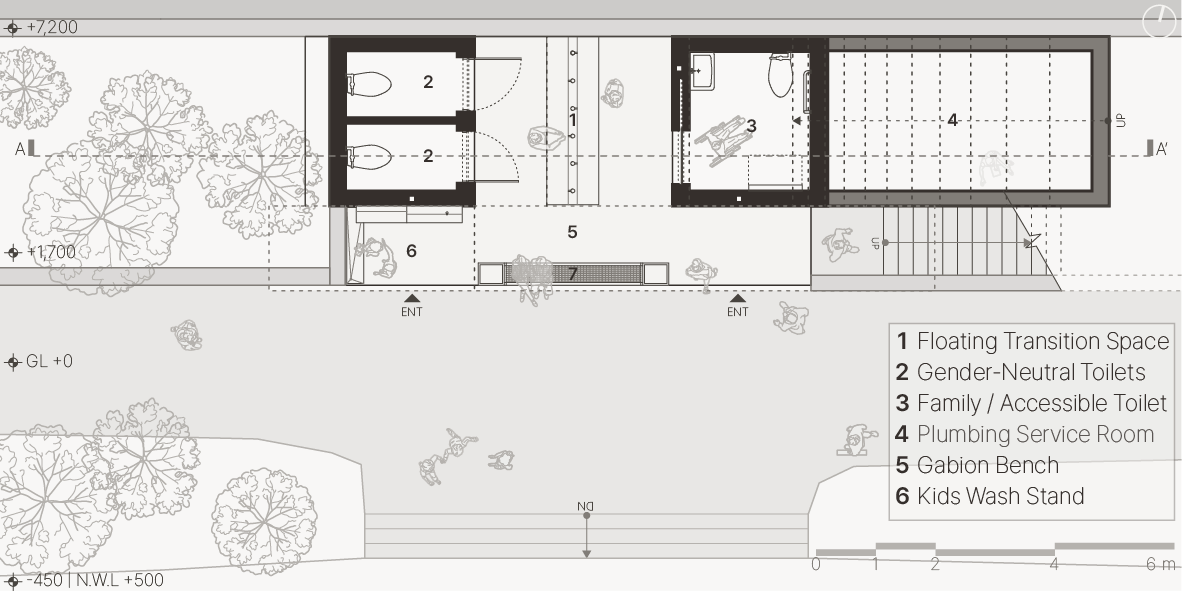
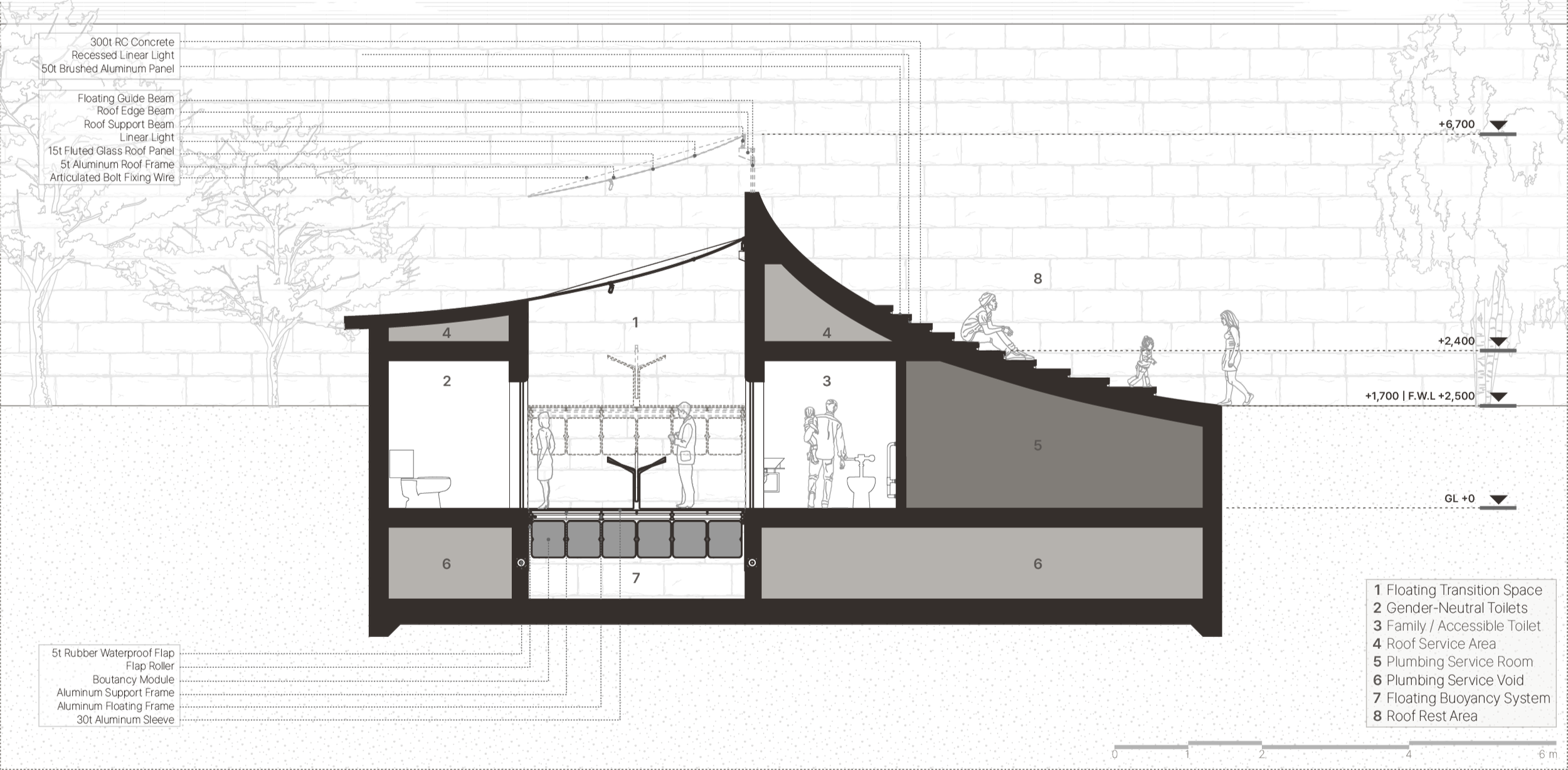
Under normal conditions, the project functions as a transitional public space where washing, resting, and movement come together. During floods, it transforms into a floating refuge that ensures public safety.
In this way, the public toilet is reinterpreted beyond its conventional sanitary role as a civic space that responds to the temporal and environmental changes of Cheonggyecheon.
[Project Team]
XA Lab : Master’s student Hyun Ji Lee, Miri Hwang, Siwoo Park